Eucalyptus globulus (Tasmanian Blue Gum)
The tree is considered an invasive species.
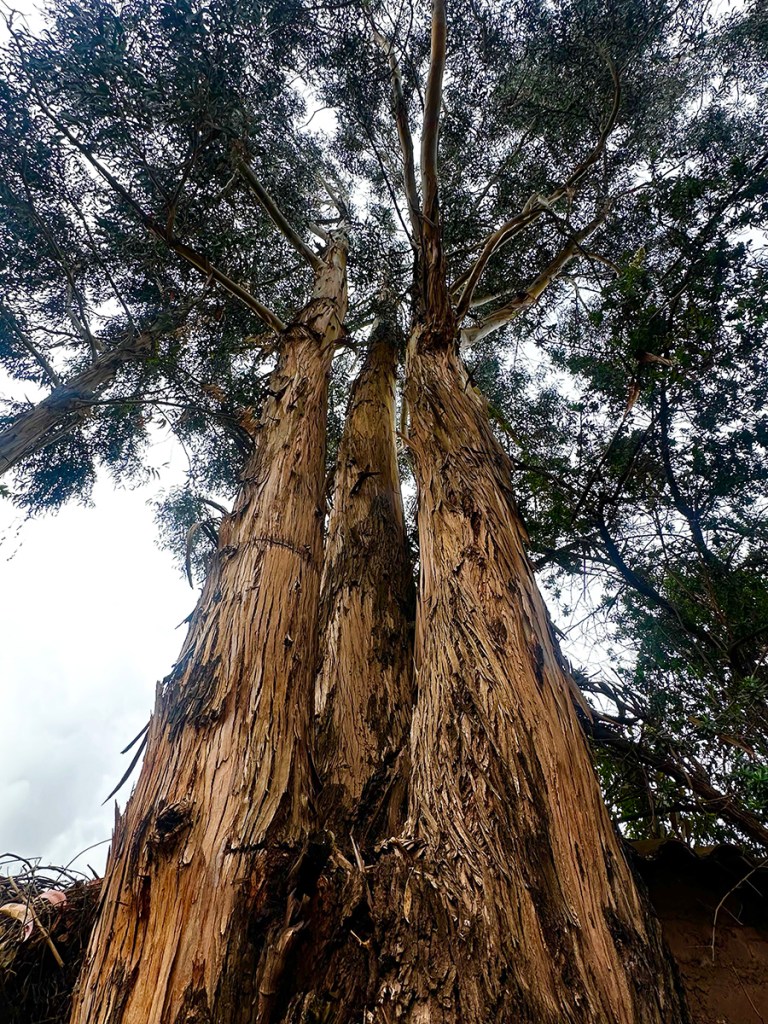
Looking up the trunk of the tree to the canopy of the Tasmanian blue gum in Peru. Image: Colette Copeland
Eucalyptus globulus (Tasmanian Blue Bum) is a fast-growing, tall evergreen tree, often reaching 100-150 feet, but capable of growing to 300 feet in ideal conditions. The bark is light tan and sheds in strips. The juvenile leaves are covered in a whiteish powdery bloom, and the adult leaves are long and green. Flowers are white and solitary with lots of nectar.
The species was brought to the Peruvian highlands in the latter half of the 19th century primarily as an ornamental tree. In the 1960s, it was planted and promoted to help the local economy for firewood, timber and erosion control. It is also used for windbreaks and reforestation.
The tree is considered an invasive species. Due to its rapid growth, it draws large amounts of water and soil nutrients. Leaves contain compounds that are toxic to many plants and animals. E. globulus is the source of eucalyptus oil, used as an antiseptic to treat coughs, cold and respiratory conditions.
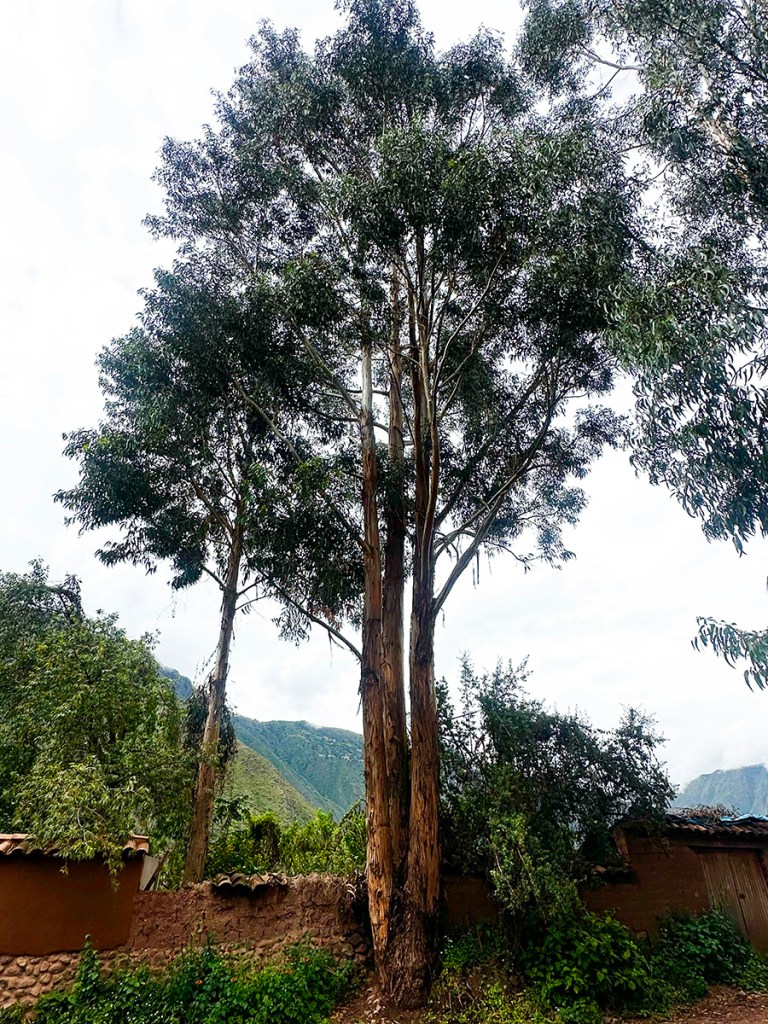
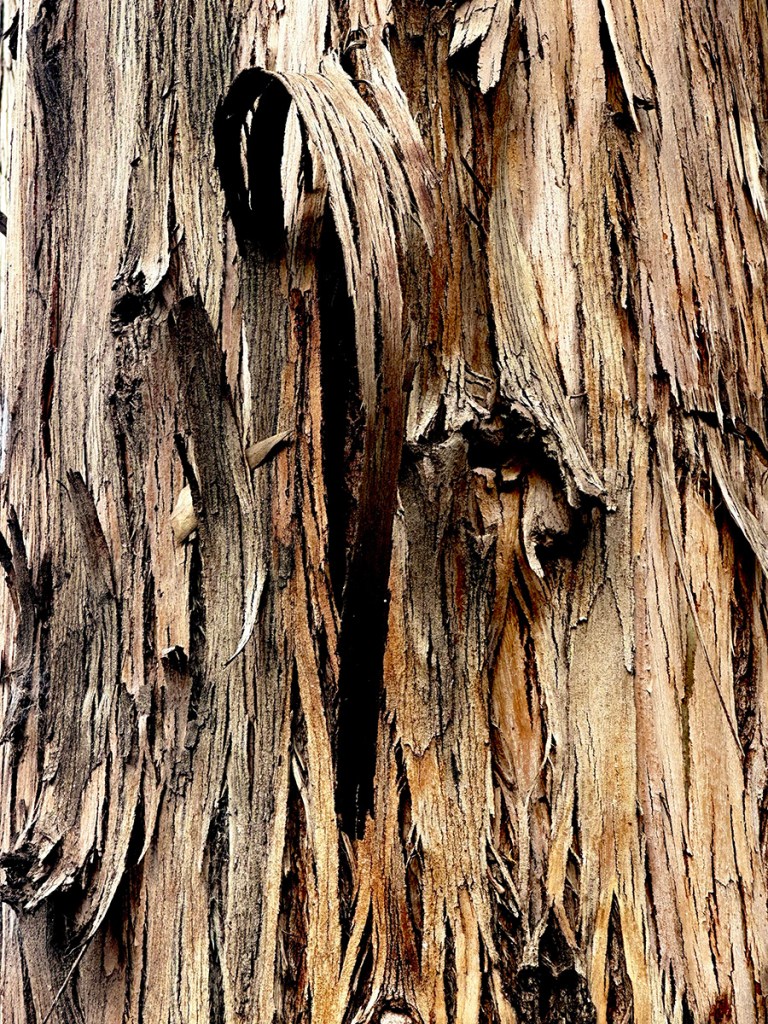
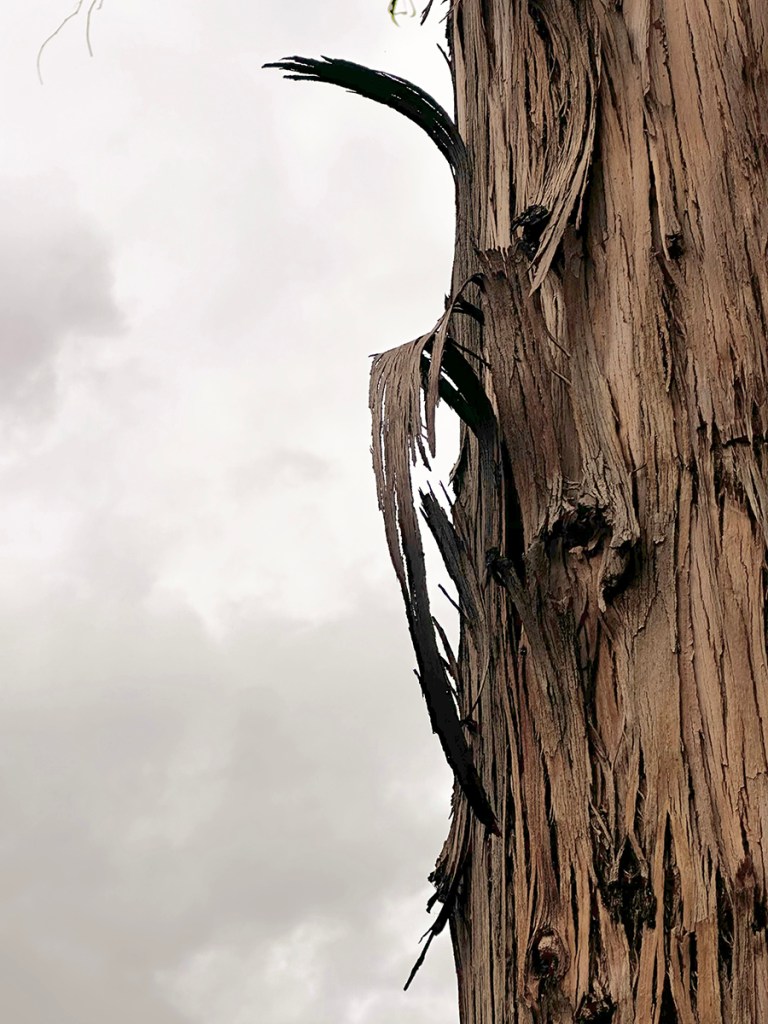
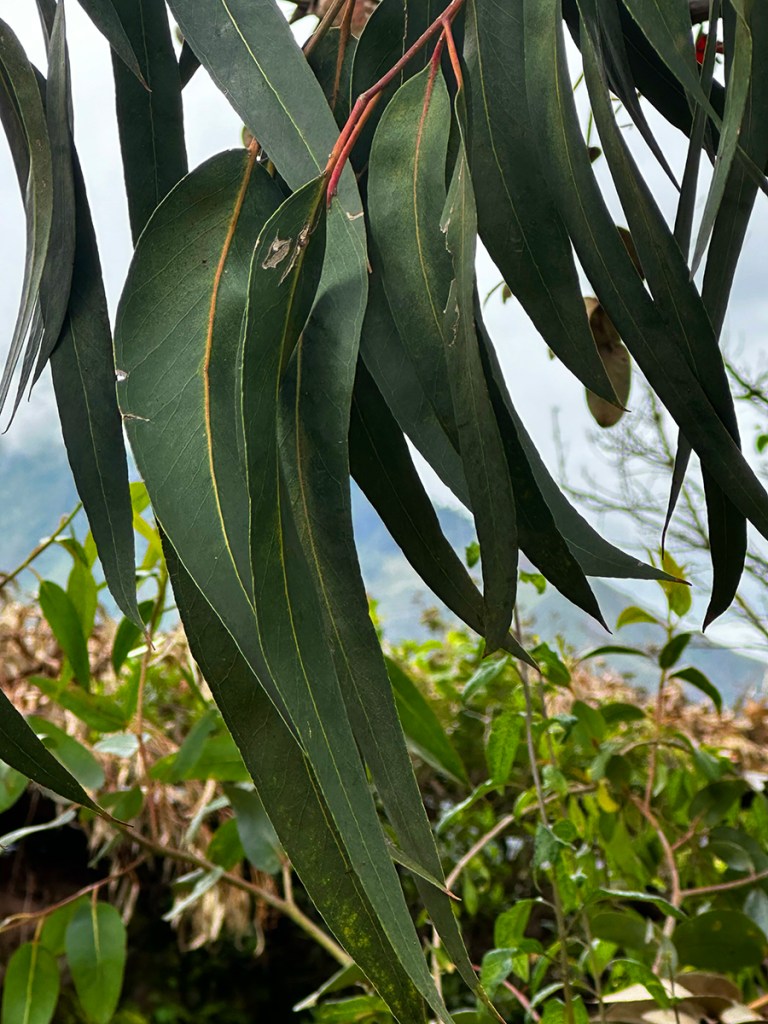
Eucalyptus globulus (Tasmanian blue gum), details of the bark and the leaves. Images: Colette Copeland
 arboreus.earth