Corymbia citriodora (Lemon-scented Gum)
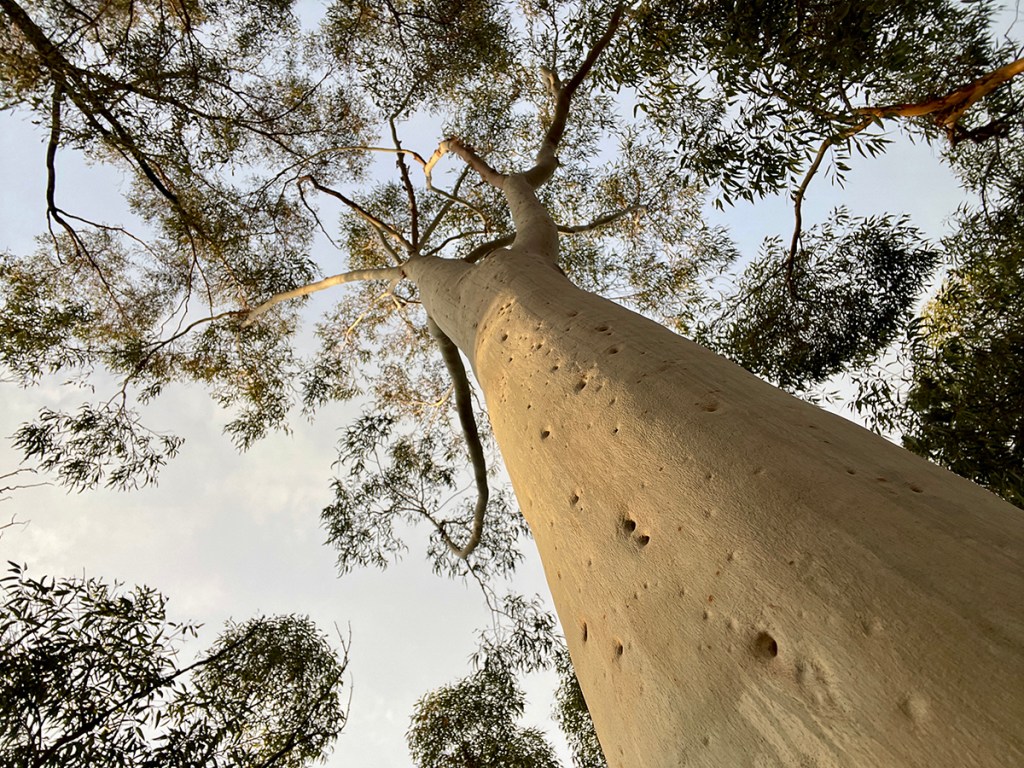
Looking up into the canopy of the smooth-barked Lemon-scented Gum. Image: Kim V. Goldsmith
Corymbia citriodora (Lemon-scented Gum) is very similar to Corymbia maculata (Spotted Gum) with only a few differences, including the smell (there are two chemotypes of both species). Citriodorus is Latin for lemon-scented.
It’s a tall tree that grows up to 50 metres, with bark that is smooth and coloured white to pink, often powdery, shedding in thin curling flakes, mottling the trunk. It has a conspicuously narrow-leaved crown which, in northern populations, is strongly lemon-scented. Pear-shaped buds are borne in clusters of three and fruit are urn-shaped to barrel-shaped and relatively thick-walled.
It’s from temperate and tropical eastern Australia It prefers lighter loamy soils or skeletal soils and occurs as a component of dry sclerophyll forest and woodlands in hilly country. The tree has naturalised in many other parts of the country due to plantings out of its natural range. They have become weedy in some areas such as Western Australia. In the right conditions, the trees self-seed easily after rain.

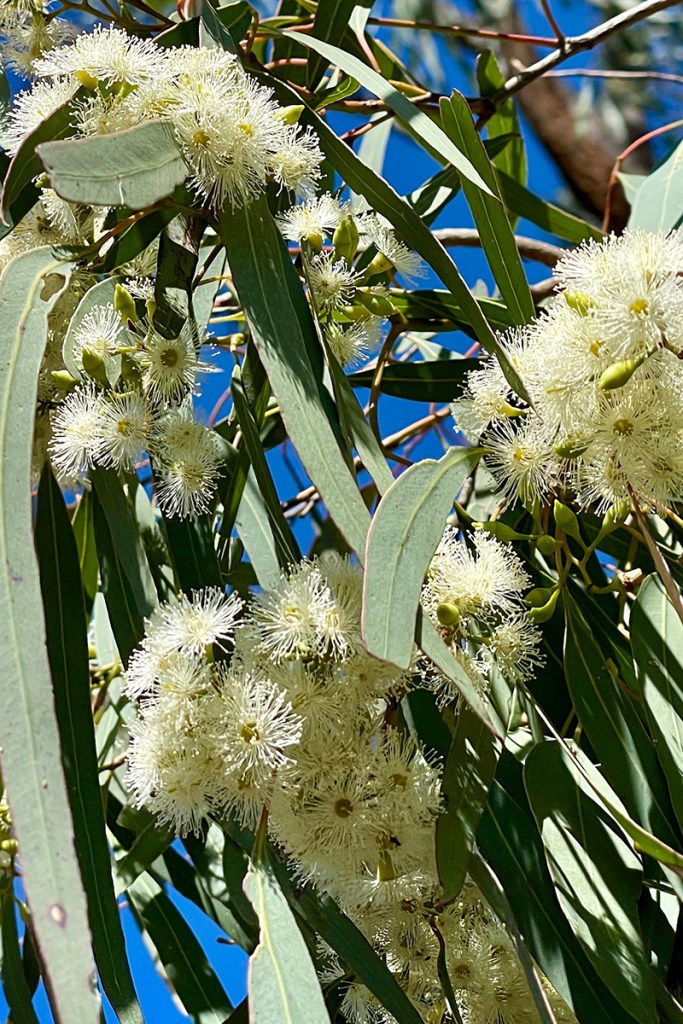
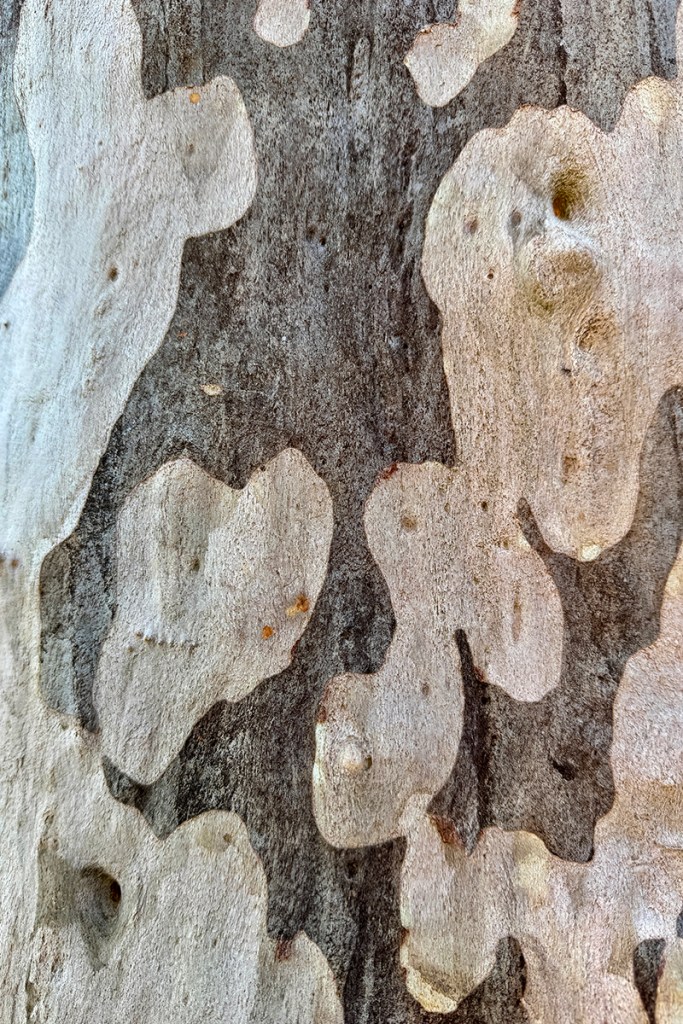
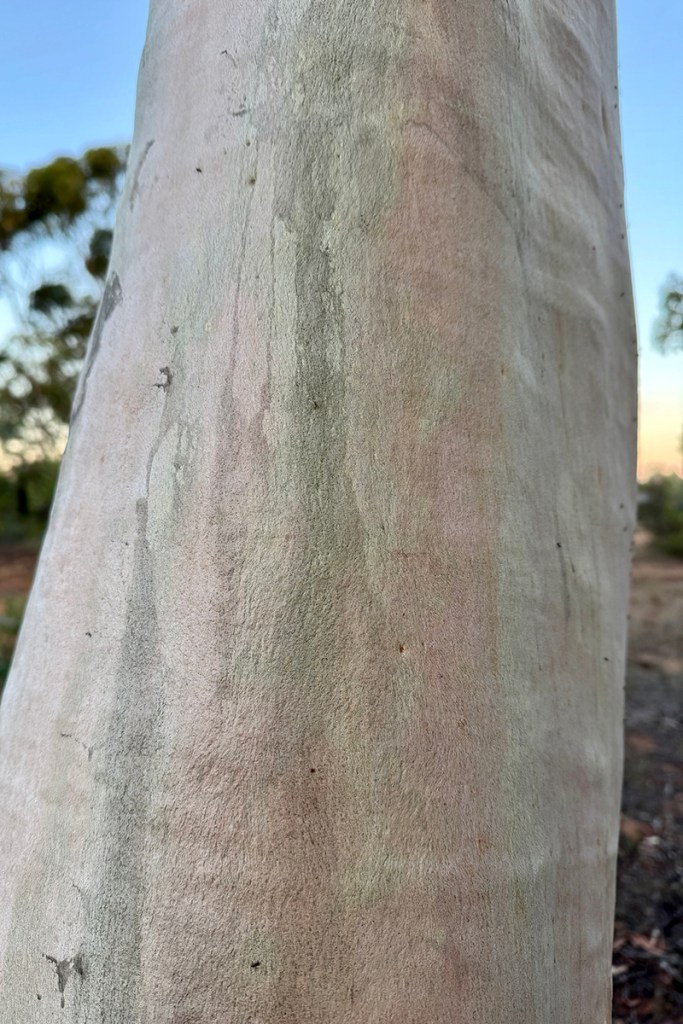
Branches, canopy, leaves and blooms, bark mottling, and the smooth bark after shedding. Images: Kim V. Goldsmith
More of Kim V. Goldsmith’s work online here and here
Notes from my bush garden
There are dozens of Lemon-scented gums in and around my home on a bush block several kilometres from the city limits. A popular native eucalypt tree in this part of New South Wales, they particularly like the light soils on the western side of the ridge where I live. In the early hours of a summer morning, when warm currents mix with cooler night air or after storm rains, the citrus smell of the trees is heady. After big rains, the trees seed, coming up in clusters of seedlings like ‘hairs on a cat’s back’. In the big winds that come with the storm season, their long, graceful white branches contort and bend. Sometimes they snap.
 arboreus.earth