Eucalyptus tereticornis (Forest Red Gum)
Images: Rochelle Summerfield
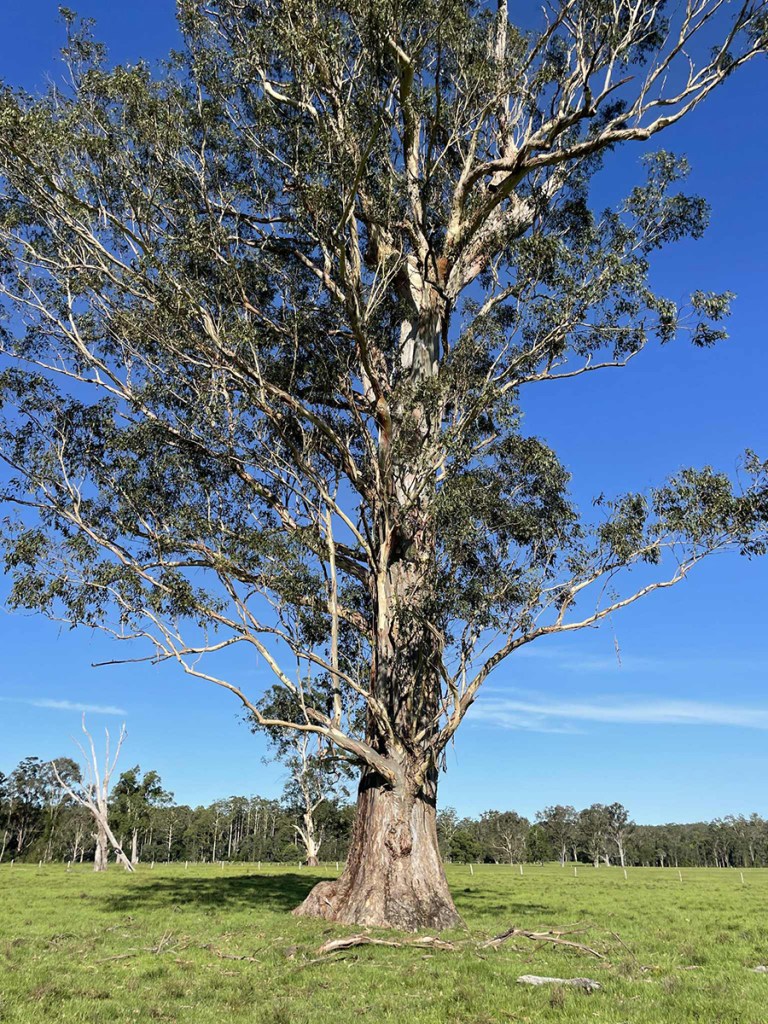
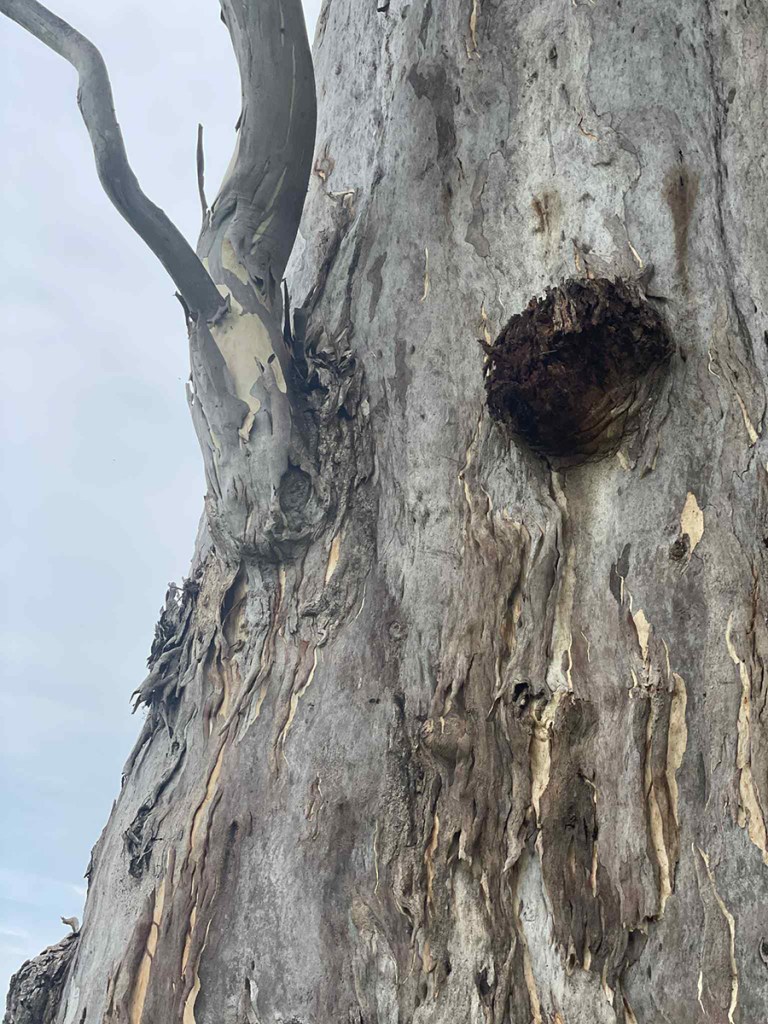
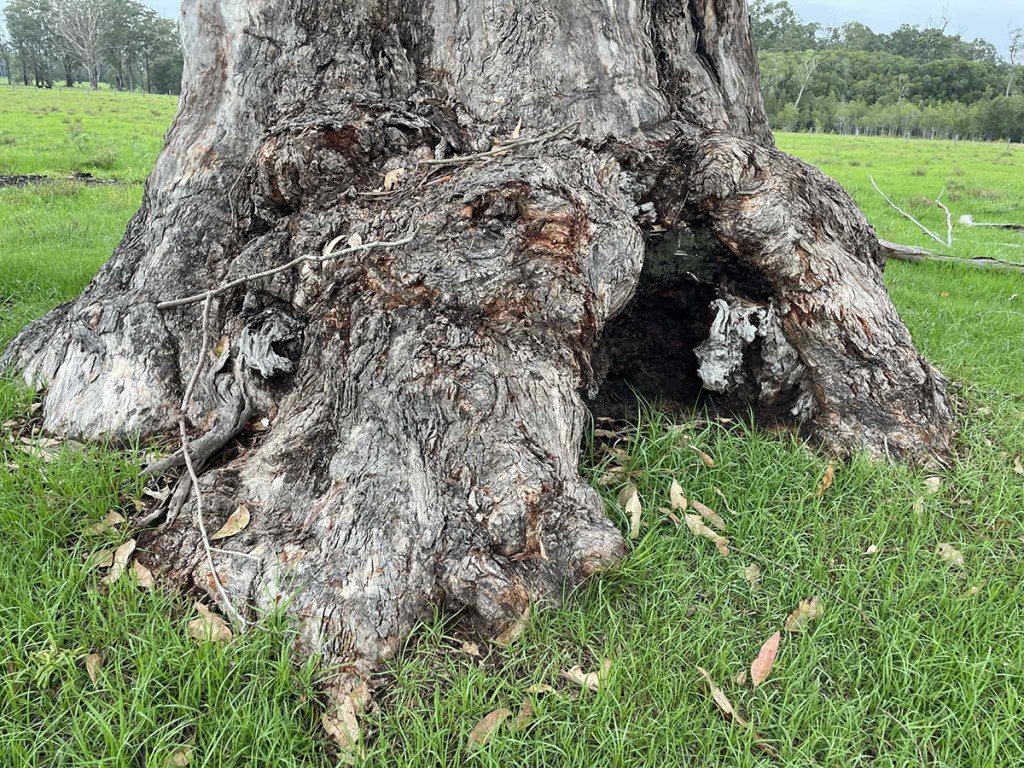
Eucalyptus tereticornis (Forest red gum or Blue gum), is a tall, fast-growing eucalypt native to eastern Australia and parts of southern New Guinea. It thrives in a range of habitats from coastal plains to inland riverbanks, stretching from southern Victoria through New South Wales and Queensland, and into Papua New Guinea. This species typically reaches heights of 20–50 metres, with a straight, erect trunk that can exceed 1.5 metres in diameter. It forms a lignotuber, allowing it to regenerate after fire. The bark is smooth and sheds in irregular flakes, revealing a mottled palette of white, grey, and bluish tones, though rough bark may persist at the base. The adult leaves are narrow, lance-shaped, and glossy green on both sides, often drooping on slender petioles. Flower buds appear in clusters of seven to eleven, producing white flowers that are rich in nectar and highly attractive to pollinators. The fruit is a small, woody, hemispherical capsule. Ecologically, E. tereticornis plays a vital role in supporting biodiversity, offering habitat and food for birds, insects, and mammals. Its nectar is a key resource for honey production, and its dense wood is valued for fuel, construction, and pulp. The species is also used in land rehabilitation and erosion control due to its robust root system and tolerance of poor soils. Notably, its rapid growth and resilience make it a cornerstone species in reforestation and carbon sequestration efforts.
Additional recording information
I spent several hours beneath this tree recording both above and below the ground. The tree was a hive of activity with many bird species (see below) visiting and abundant insect life. It was a windy day and the sound of branches rustling and leaves vibrating add to the colloquy of bird and insect conversations. This soundscape reflects the fundamental importance of this tree as a local haven of biodiversity. — Will Rodgers
This is a list of species, elements and anthropogenic sounds positively identified that contribute their voices to this piece.
Birds:
Laughing Kookaburra (Dacelo novaeguineae)
Torresian Crow (Corvus orru)
Rainbow Lorikeet (Trichoglossus moluccanus)
White-throated Treecreeper (Cormobates leucophaea)
Grey Butcherbird (Cracticus torquatus)
Sahul Cicadabird (Edolisoma tenuirostre)
Magpie-lark (Grallina cyanoleuca)
Little Friarbird (Philemon citreogularis)
Insects:
Cicada spp
Elements:
Wind in branches
 arboreus.earth