Eucalyptus camaldulensis (River Red Gum)
Wiradjuri: biyal, yarra, murungal
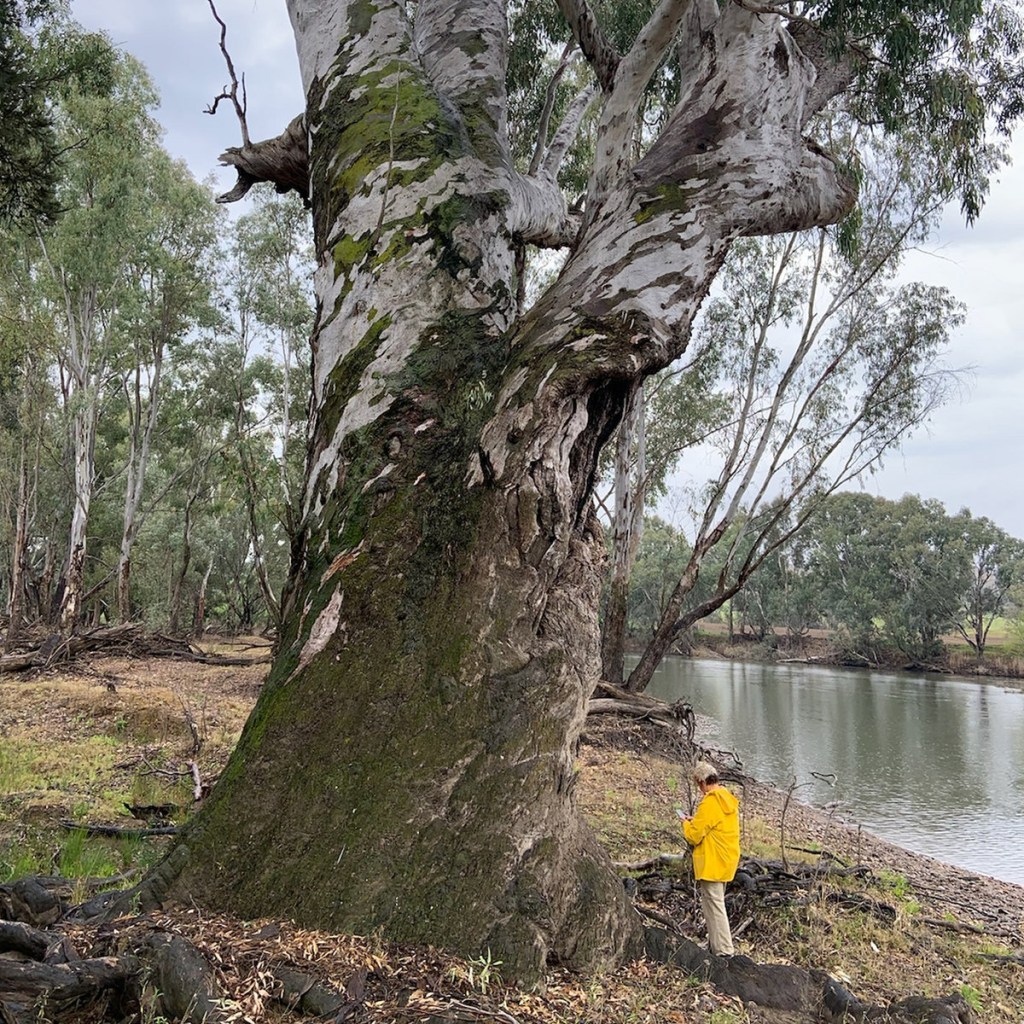
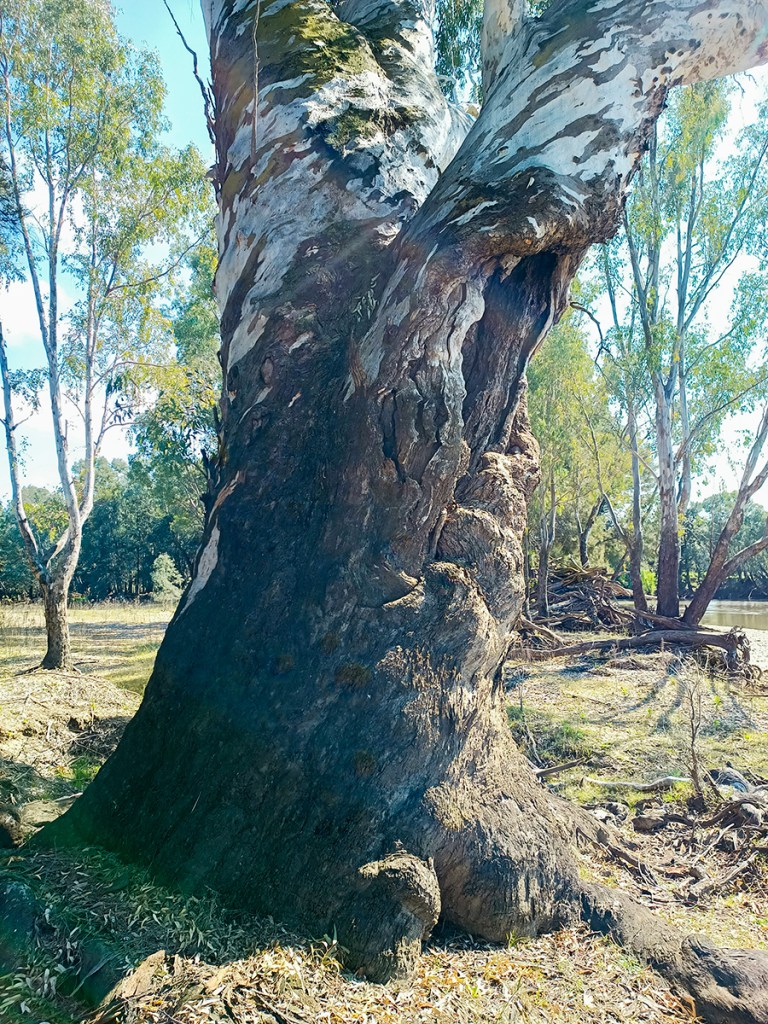
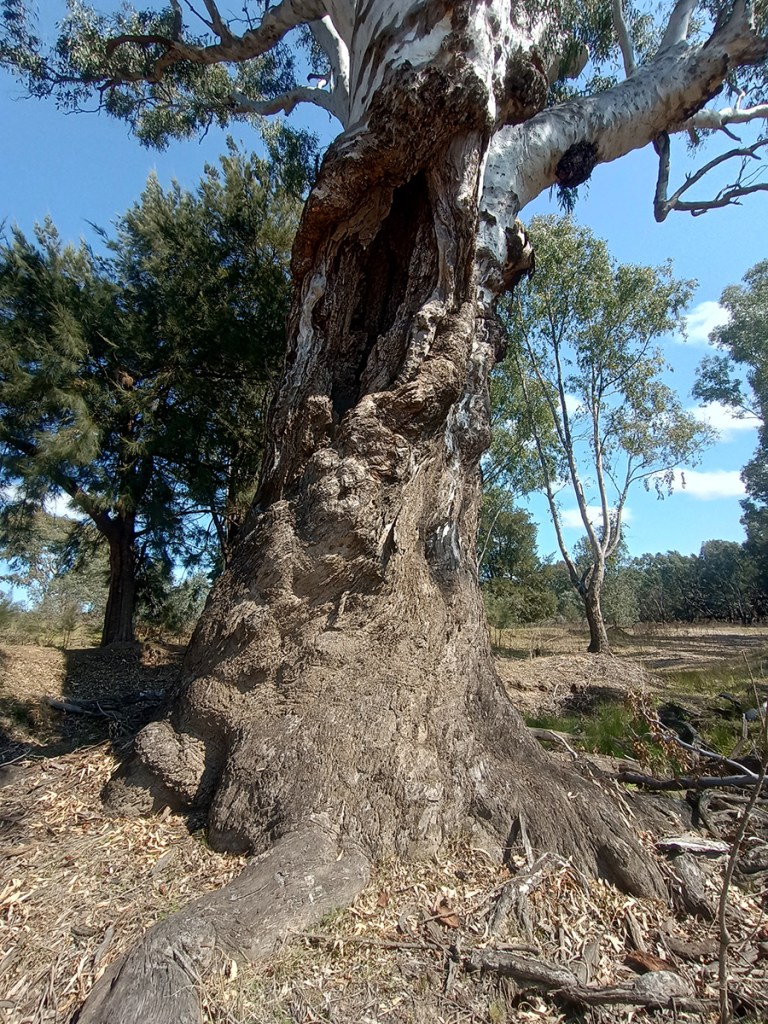
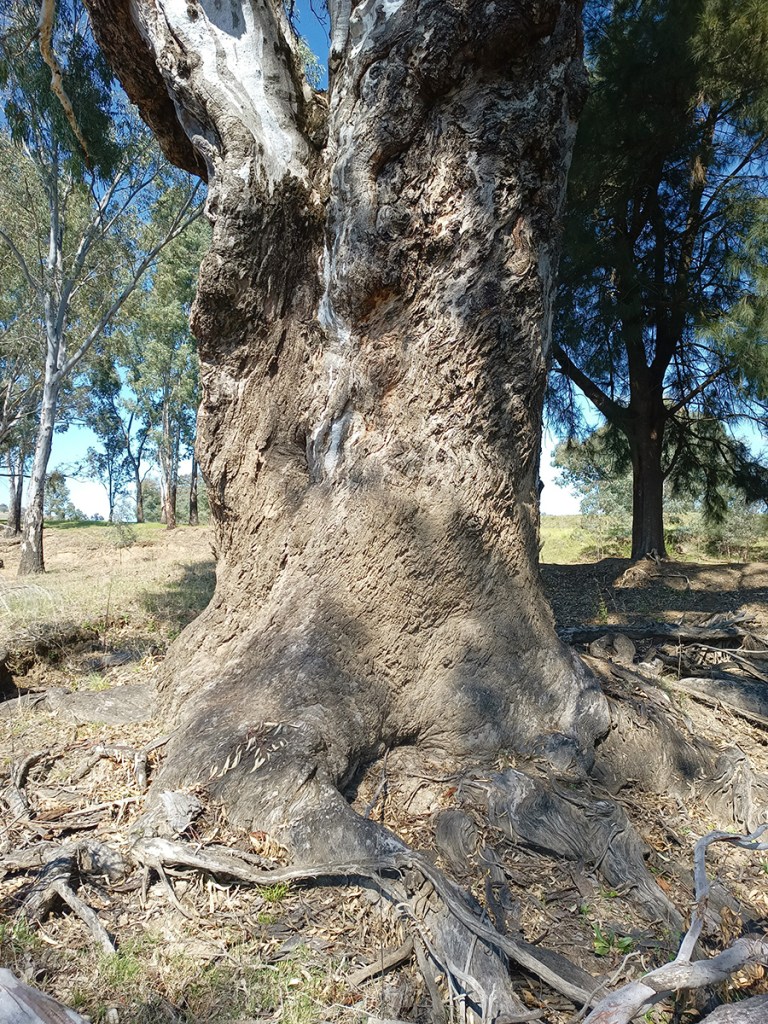
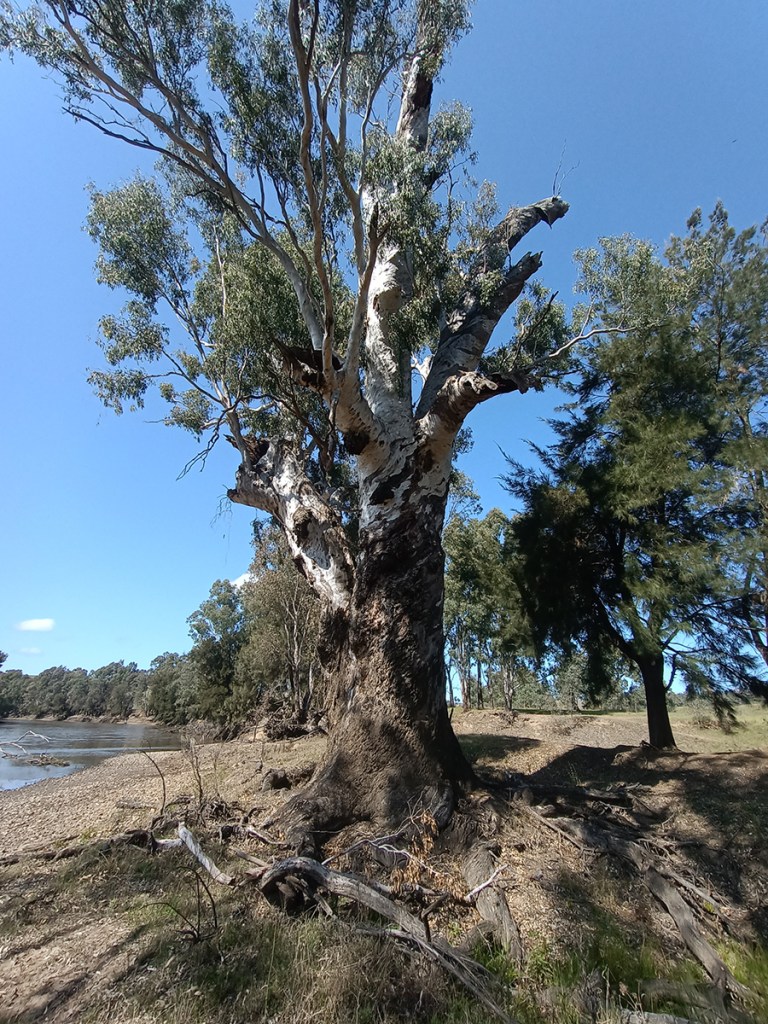
Images: Will Rodgers
Eucalyptus camaldulensis, commonly known as the River Red Gum, is a significant tree species that typically attains a height of 20 metres, though it can sometimes reach up to 45 metres. The tree is identified by its smooth bark, which is generally white or cream-coloured and often features patches of yellow, pink, or brown. Near the base of the trunk, there are frequently loose, rough slabs of bark. The foliage of the River Red Gum progresses from small lance-shaped juvenile leaves to larger lance shaped adult leaves coloured a dull grey green. The flower buds are arranged in groups of seven, nine, or occasionally eleven. Flowering primarily occurs in summer, producing white flowers, and the plant’s flowers bloom for a long time throughout the year. It is a culturally important tree for indigenous peoples with many parts of the tree used including the wood, bark, leaves and sap. Canoes were made from the outer bark layer and shields from the harder wood just under the bark.
Additional recording information
This is a list of species, elements and anthropogenic sounds positively identified that contribute their voices to this piece.
Insects:
Hemiptera species (possibly Micronecta spp.) and potentially Coleoptera species.
Fly (possibly Musca sp.)
Black Field Cricket (Teleogryllus commodus)
Fish:
Potential unknown fish species
Birds:
Sulphur-crested Cockatoo (Cacatua galerita)
Little Friarbird (Philemon citreogularis)
Magpie Lark (Grallina cyanoleuca)
Spotted Pardalote (Pardalotus punctatus)
Grey Shrikethrush (Colluricincla harmonica)
Crimson Rosella (Platycercus elegans)
White-plumed Honeyeater (Ptilotula penicillata)
Willie Wagtail (Rhipidura leucophrys)
Galah (Eolophus roseicapilla)
White-throated Treecreeper (Cormobates leucophaea)
Little Raven (Corvus mellori)
Rufous Whistler (Rhipidura rufiventris)
Yellow-rumped Thornbill (Acanthiza chrysorrhoa)
Striated Pardalote (Pardalotus striatus)
Australian Magpie (Gymnorhina tibicen)
Noisy Friarbird (Philemon corniculatus)
Laughing Kookaburra (Dacelo novaeguineae)
Yellow-faced Honeyeater (Caligavis chrysops)
White-throated Treecreeper (Cormobates leucophaea)
Eastern Rosella (Platycercus eximius)
Shining Bronze Cuckoo (Chalcites lucidus)
White-faced Heron (Egretta novaehollandiae)
Sacred Kingfisher (Todiramphus sanctus)
Elements:
Water flow from Marrambidya
Wind and River Red Gum branches and roots in conversation with the earth
Anthropogenic sounds:
Aeroplane
 arboreus.earth