Eucalyptus camaldulensis (River Red Gum)
Wiradjuri: biyal, yarra, murungal
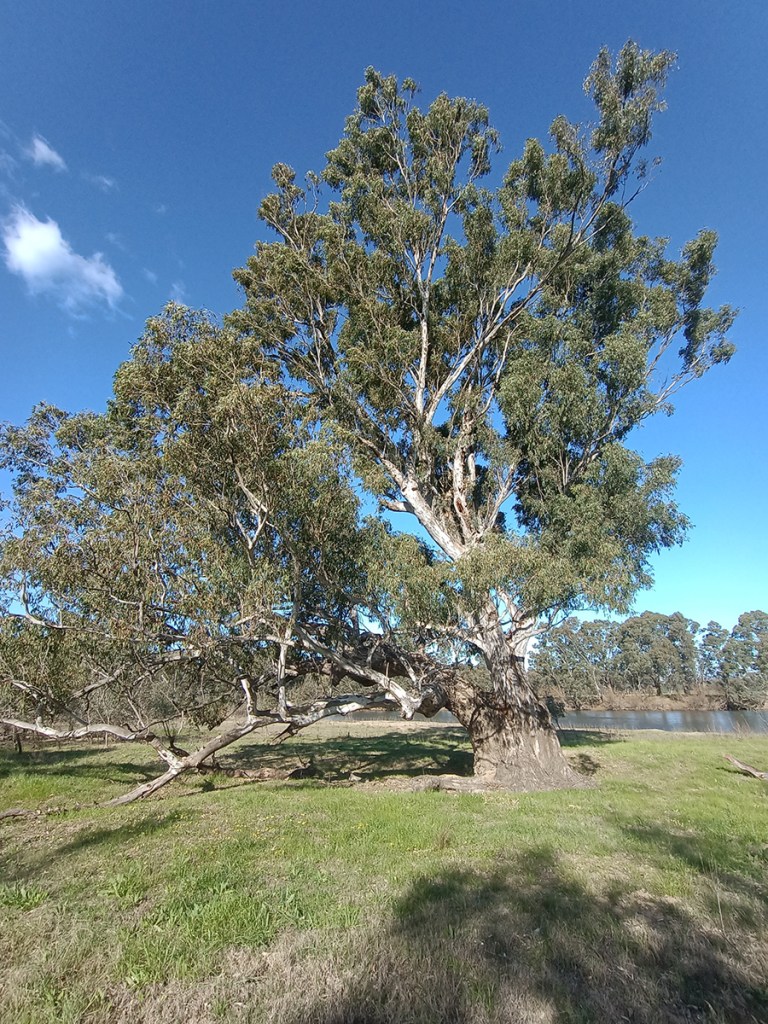
Image: Will Rodgers
Eucalyptus camaldulensis, commonly known as the River Red Gum, is a significant tree species that typically attains a height of 20 metres, though it can sometimes reach up to 45 metres. The tree is identified by its smooth bark, which is generally white or cream-coloured and often features patches of yellow, pink, or brown. Near the base of the trunk, there are frequently loose, rough slabs of bark. The foliage of the River Red Gum progresses from small lance-shaped juvenile leaves to larger lance shaped adult leaves coloured a dull grey green. The flower buds are arranged in groups of seven, nine, or occasionally eleven. Flowering primarily occurs in summer, producing white flowers, and the plant’s flowers bloom for a long time throughout the year. It is a culturally important tree for indigenous peoples with many parts of the tree used including the wood, bark, leaves and sap. Canoes were made from the outer bark layer and shields from the harder wood just under the bark.
Additional recording information
This is a list of species, elements and anthropogenic sounds positively identified that contribute their voices to this piece.
Birds:
Striated Pardalote (Pardalotus striatus)
Grey Shrike Thrush (Colluricincla harmonica)
Sulphur-crested Cockatoo (Cacatua galerita)
Little Friarbird (Philemon citreogularis)
Yellow-rumped Thornbill (Acanthiza chrysorrhoa)
Superb Fairywren (Malurus cyaneus)
Willie Wagtail (Rhipidura leucophrys)
Western Gerygone (Gerygone fusca)
Australian Raven (Corvus coronoides)
Elements:
Red River Gum, wind and earth in conversation
Background murmur of shallows of Marrambidya
 arboreus.earth