Casuarina cunninghamiana (River Oak, River She-Oak)
Wiradjuri: bilawi
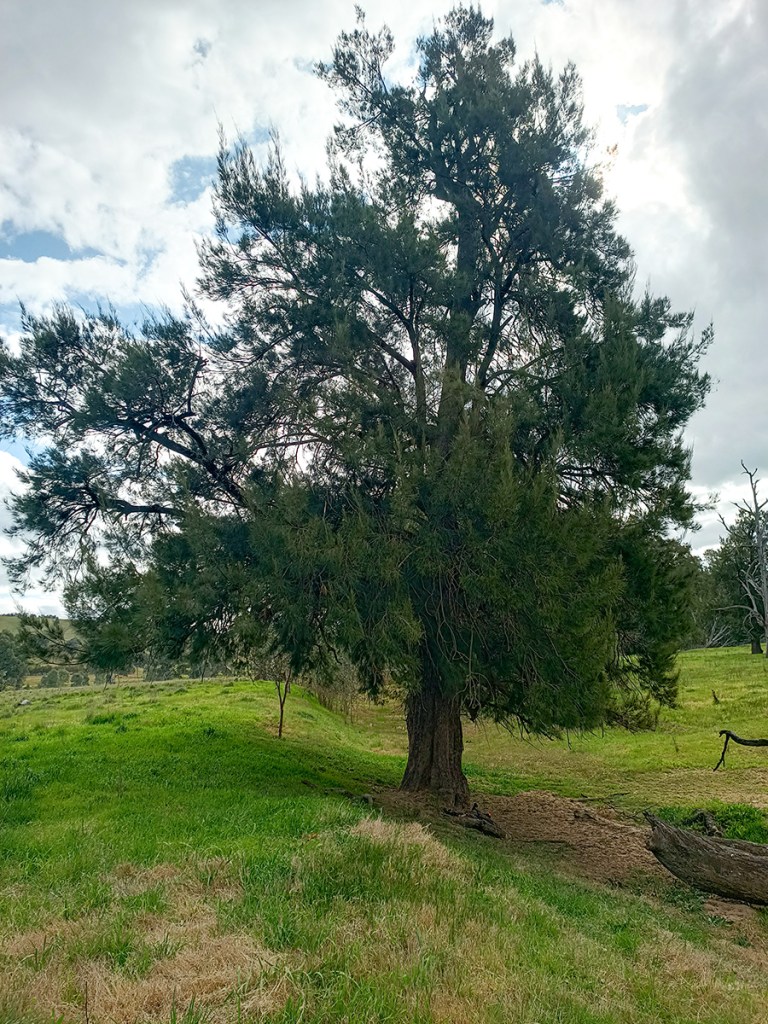
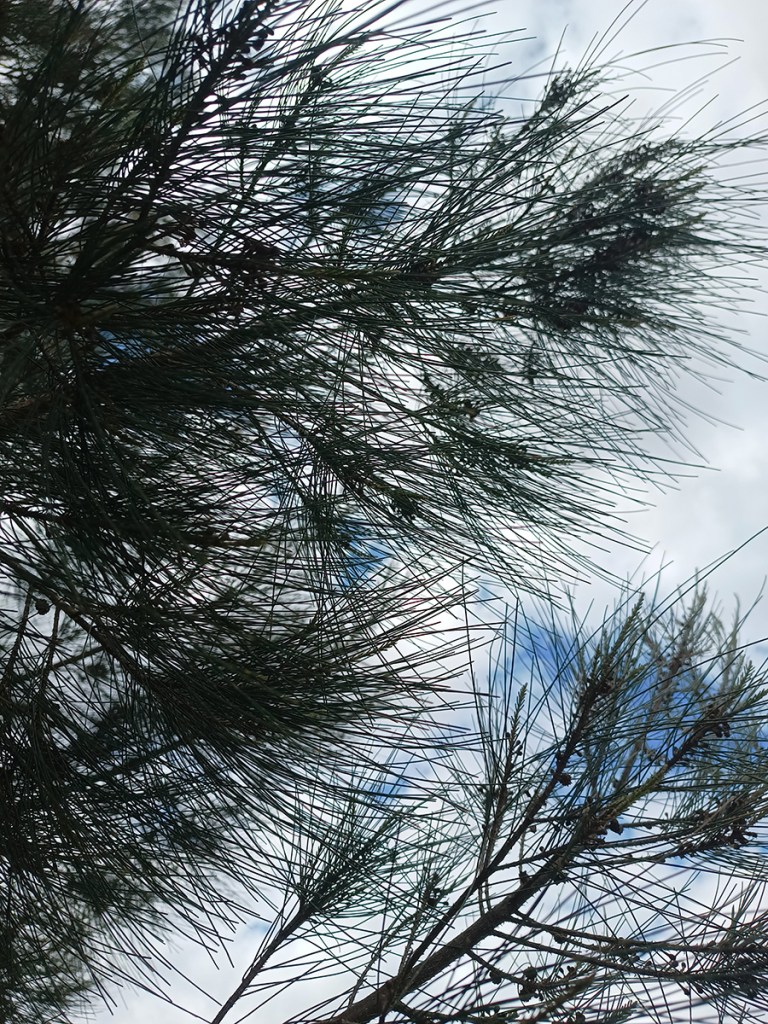
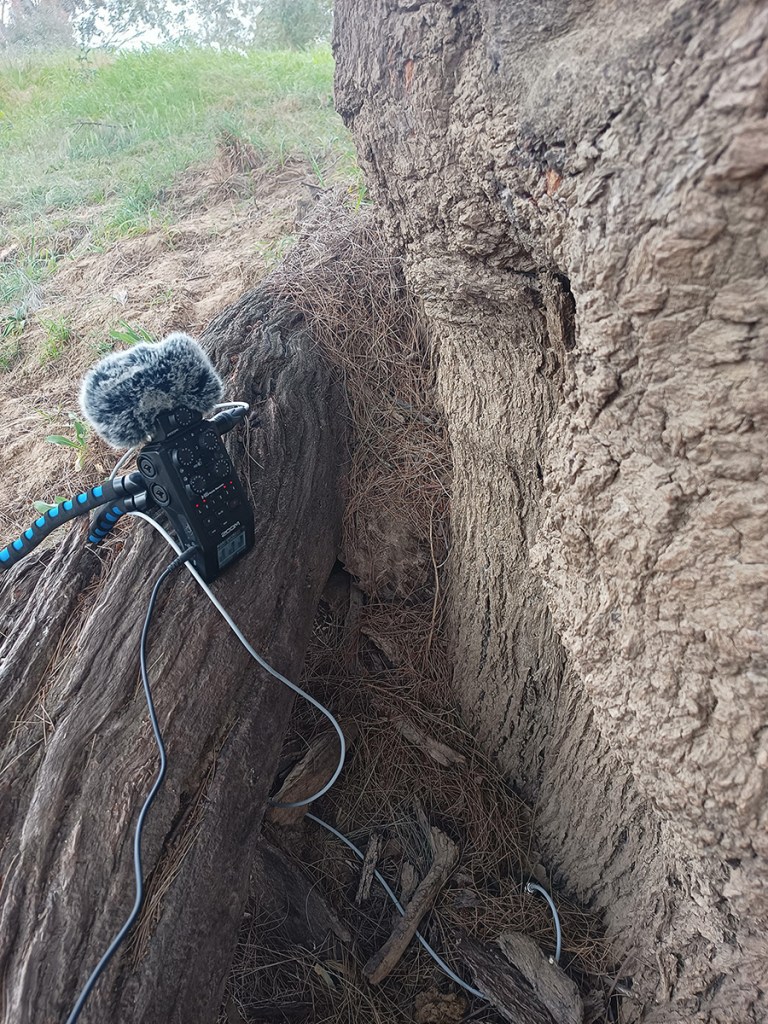
Images: Will Rodgers
Casuarina cunninghamiana, (River Oak or River She-oak), is a tall, fast-growing tree native to eastern Australia and southern New Guinea, particularly along freshwater rivers and streams in New South Wales, Queensland, and Victoria. It thrives in alluvial soils and is often found stabilizing riverbanks, where its dense root system helps prevent erosion. The tree typically reaches 15–35 metres in height, with a trunk diameter of 0.5–1.5 metres. It has a pyramidal crown in youth, becoming more open and spreading with age. The bark is dark brown, rough, and deeply fissured, while the foliage consists of drooping, jointed, needle-like branchlets (cladodes) that function as leaves. True leaves are reduced to tiny scale-like teeth arranged in whorls of 6–10 at the joints. C. cunninghamiana is dioecious, with male and female flowers on separate trees: males form slender spikes at branchlet tips, while females produce small, rounded cones that release winged seeds (samaras) in autumn. Ecologically, River Oak is vital for riparian habitat restoration, offering shade, erosion control, and habitat for birds and insects. Its hardwood is valued for fuel, fencing, and construction, and the tree is also used in windbreaks and shelterbelts. Its ability to fix nitrogen through symbiosis with Frankia bacteria enhances soil fertility, making it a useful species in degraded landscapes.
Additional recording information
This is a list of species, elements and anthropogenic sounds positively identified that contribute their voices to this piece.
Birds:
Superb Fairywren (Malurus cyaneus)
Sulphur-crested Cockatoo (Cacatua galerita)
Weebill (Smicrornis brevirostris)
Rufous Whistler (Pachycephala rufiventris)
Straited Pardalote (Pardaloyus striatus)
Crimson Rosella (Platycerus elegans)
White-throated Treecreeper (Cormobates leucophaea)
Willy Wagtail (Rhipidura leucophrys)
Elements:
Wind in conversation with needles of the River Oak
Soil vibrations of branches and trunk moving in the wind
 arboreus.earth