Brachychiton populneus (Kurrajong)
Wiradjuri: dhin
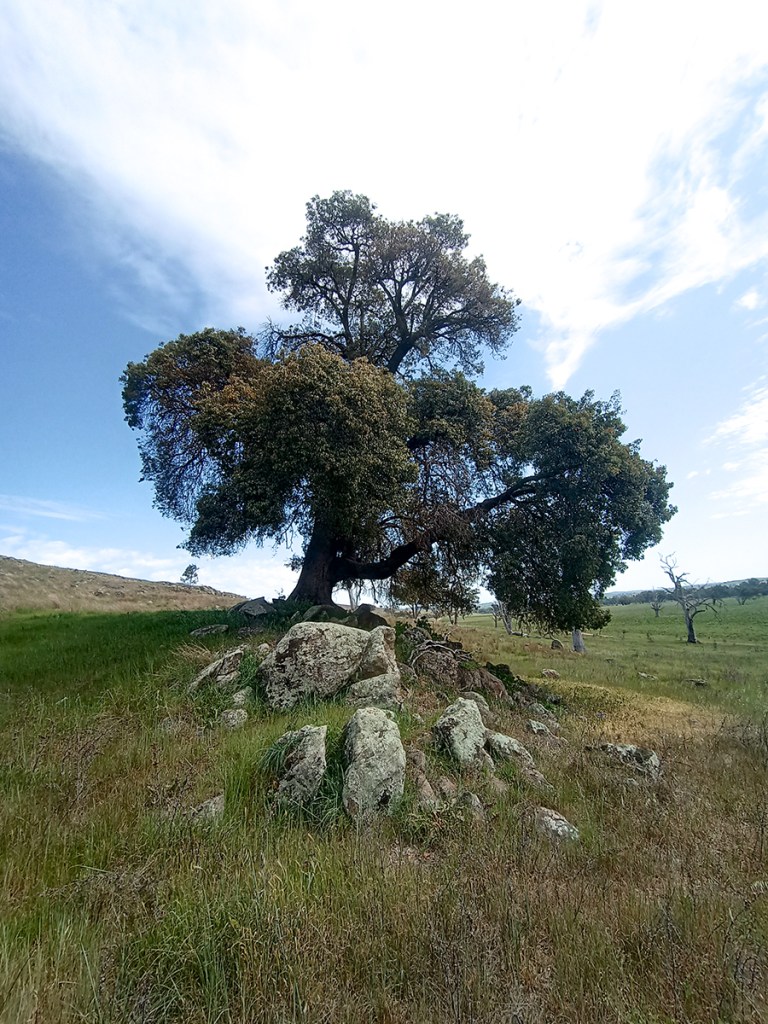
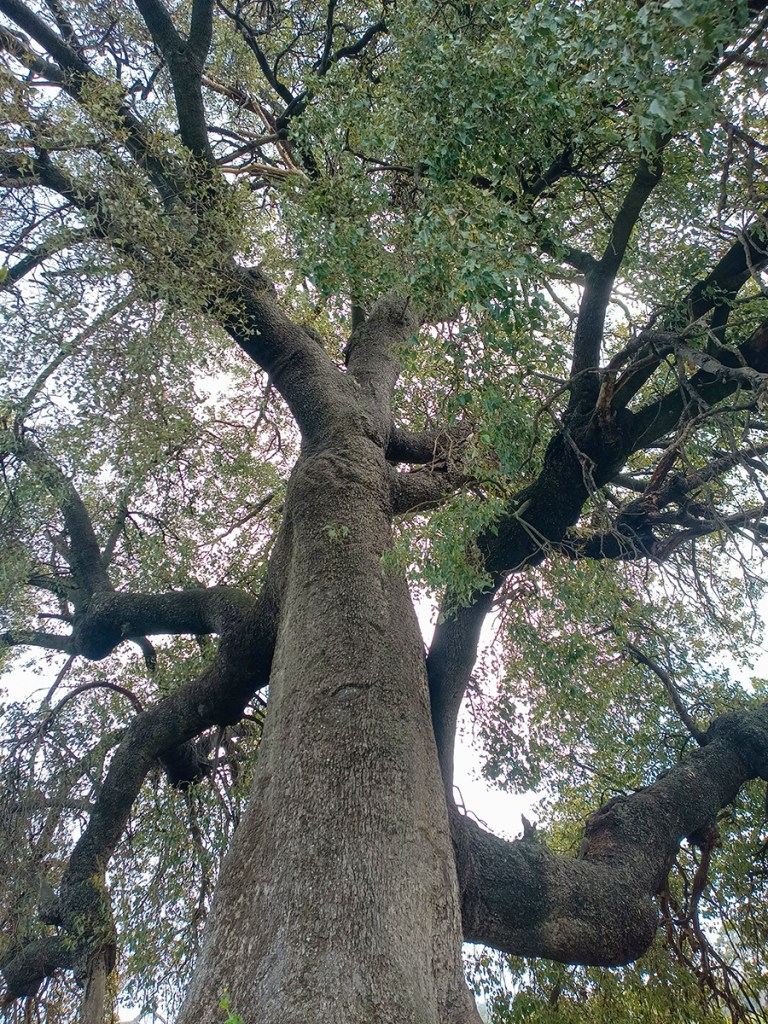
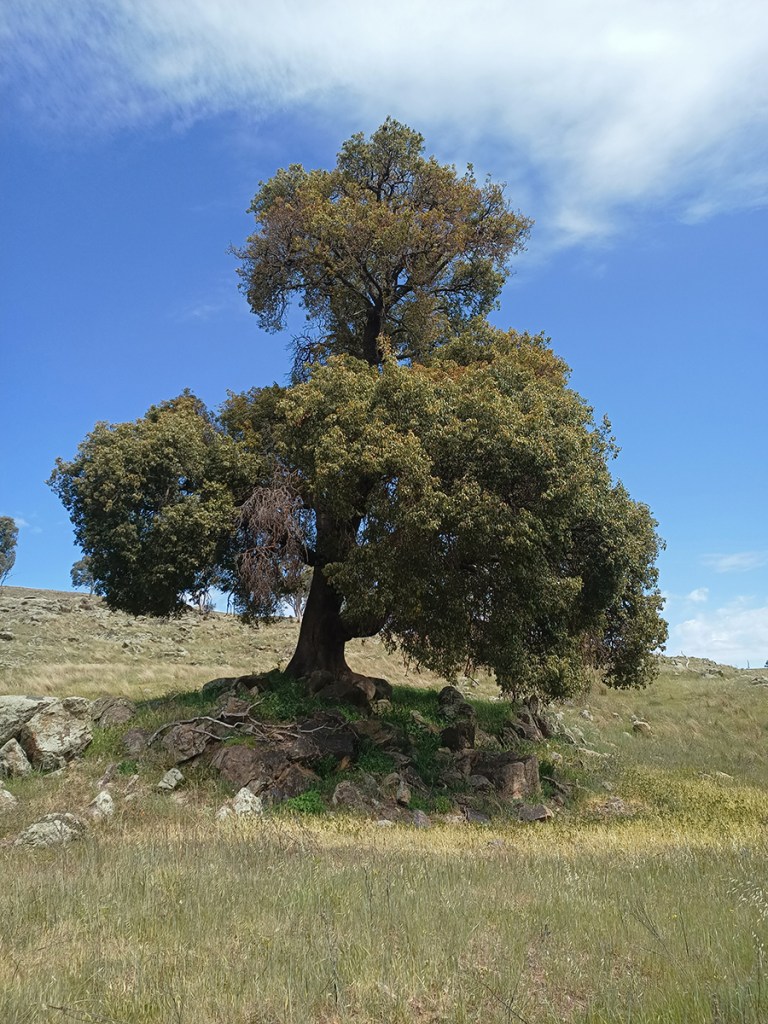
Images: Will Rodgers
Brachychiton populneus, commonly known as Kurrajong, is a drought-tolerant tree native to eastern Australia, particularly across New South Wales, Queensland, Victoria, and parts of the Northern Territory. It thrives in a variety of habitats, from coastal forests to semi-arid inland regions, and is well adapted to nutrient-poor soils. Its resilience and ornamental appeal have led to its cultivation in other warm temperate regions worldwide. Typically growing to 10–20 metres in height, the Kurrajong has a broad, domed canopy and a stout, water-storing trunk, which enables it to survive prolonged dry periods. The bark is smooth and greenish on young branches, becoming dark, rough, and fissured with age. Its leaves are highly variable—ranging from entire, poplar-like shapes (in subspecies populneus) to deeply lobed forms (in subspecies trilobus)—and are glossy green above, paler beneath. The bell-shaped flowers, appearing from October to December, are cream to pale green with pink to purple flecks in the throat. These are followed by woody follicles that split open to release seeds covered in fine, irritant hairs. Ecologically, B. populneus is valued for its shade, soil stabilization, and drought resilience. It was traditionally important to Aboriginal Australians, who used its seeds as food, fibrous bark for twine, and roots for water. Today, it is widely planted in urban landscapes and rural shelterbelts, and its ability to store water and withstand harsh conditions makes it a useful species in climate-adaptive planting schemes.
Additional recording information
Birds:
Striated Pardalote (Pardalotus striatus)
Sulphur-crested Cockatoo (Cacatua galerita)
Superb Fairywren (Malurus cyaneus)
Western Gerygone (Gerygone fusca)
Unidentified raptor – perhaps, Brown or Grey Falcon?
Mammals:
Cow (Bos taurus)
Elements:
Kurrajong, wind and earth in conversation
 arboreus.earth