Aesculus glabra var. glabra (Ohio Buckeye)
“I sat cross-legged, facing the tree, as if we were sharing something. Car traffic and the sound of a nearby flight centre insert themselves in what is otherwise a serene environment.”
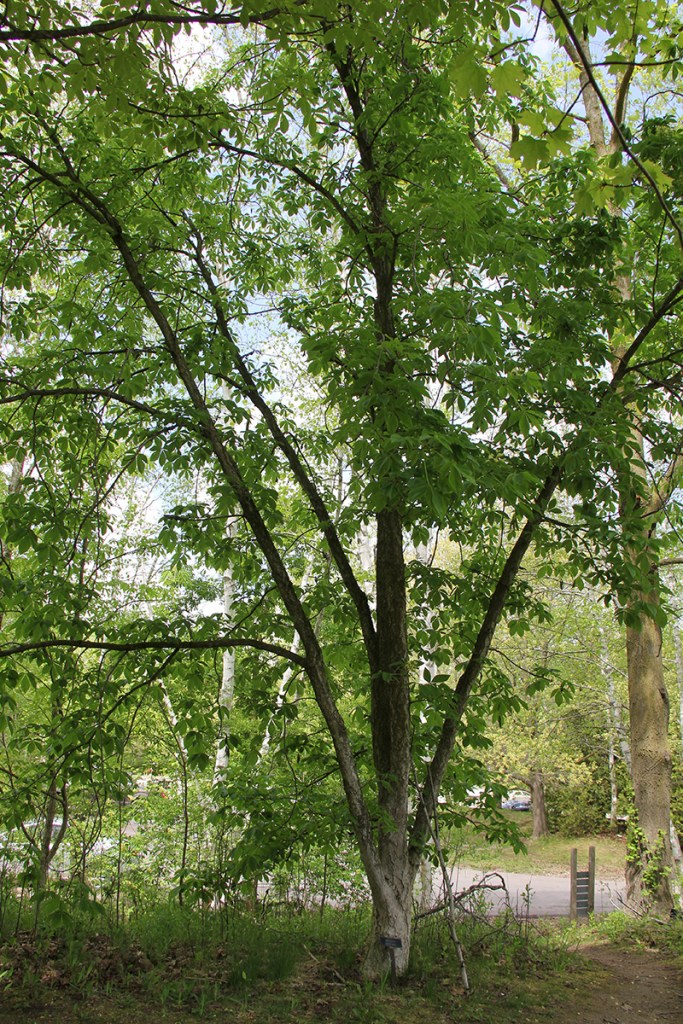
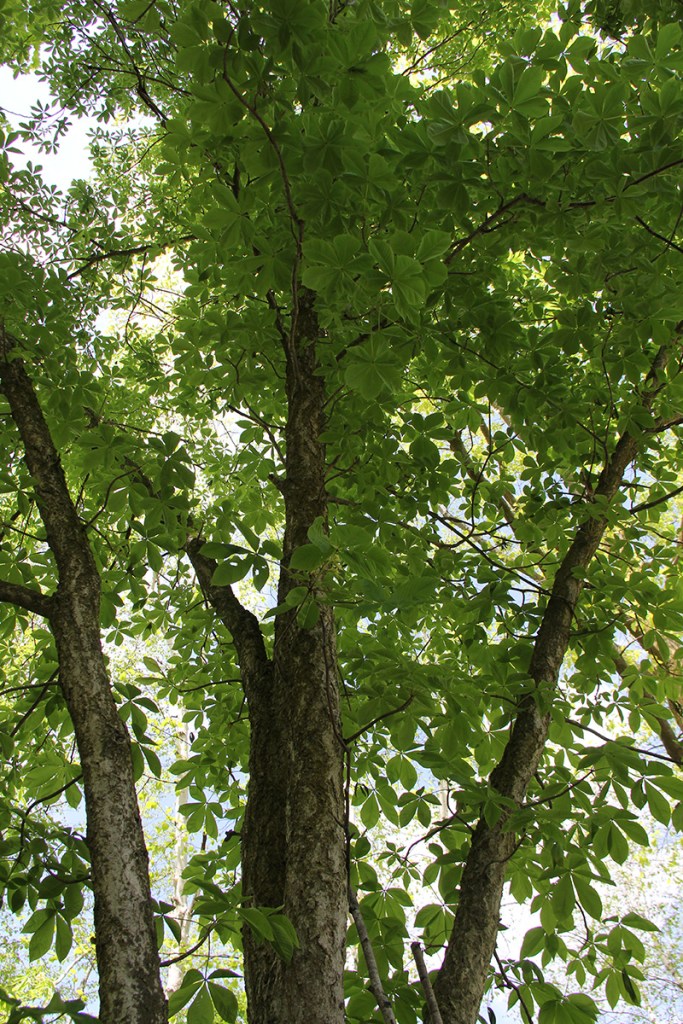
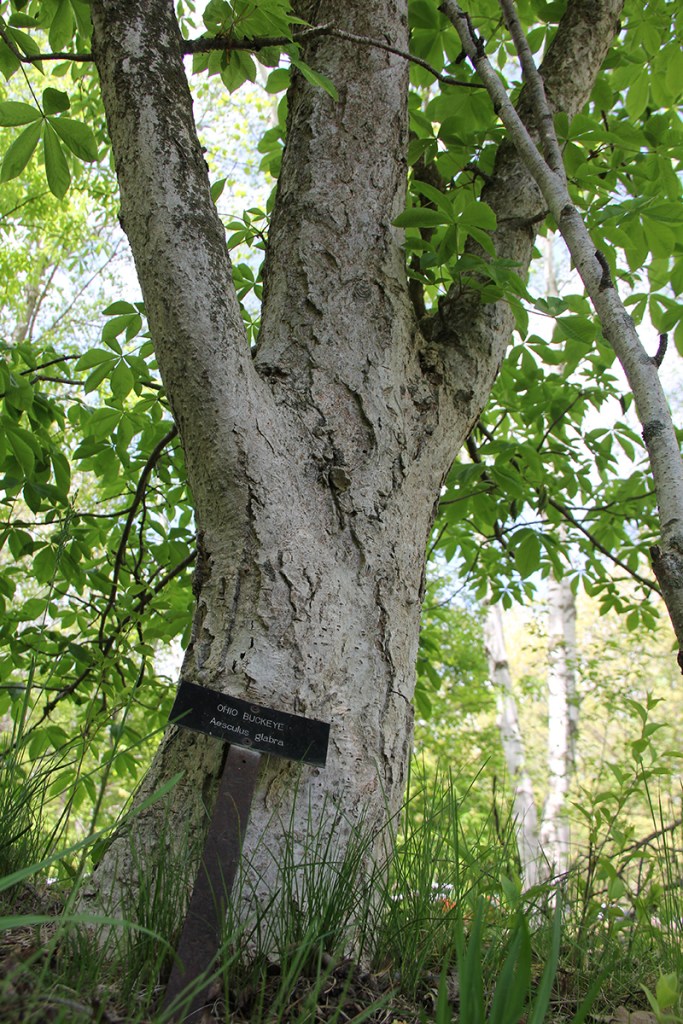
1. The Ohio Buckeye centres the image. In the distance the viewer can see on of the parking lots for the University of Guelph Arboretum. 2. A view from the ground up, examining the upper-leaves and canopy. 3. An image of the trees label and its trunk. Closer to what I would have seen while I sat cross-legged, listening to the tree. Images: Jordan Zalis
This particular Ohio Buckeye is part of the Rare Woody Plants of Ontario collection at the Arboretum, University of Guelph.There are eleven Ohio Buckeyes in the collection. The species holds an S1 designation in the the province: Extremely rare in Ontario (usually 5 or fewer occurrences in the province, or very few remaining remaining hectares). The Ohio Buckeye is a medium-sized canopy tree that typically reaches a height of 50–75 feet. Often used as an ornamental tree, it is known for its interesting fruit and vibrant orange foliage in the fall. Its branches curve downward towards the ground before arching back upward, forming a rounded silhouette. The tree’s dense, attractive, deciduous foliage is palmately compound. It produces showy, upright clusters of blossoms at the tips of its twigs. The fruit is encased in a spiny, splitting husk (capsule). When crushed, the tree’s twigs and leaves may release a slightly unpleasant odour.
This got me thinking…
As I listen to this tree—the wind rustling through its leaves—I begin to wonder what the tree might hear if it were listening.
Steel slicing through the sky—rapid transit, fossil fuels—their relentless flowing pipelines.
Clouds drift overhead. I close my eyes.
What might it tell me under moonlight.
– Jordan Zalis, 16 May, 2025
 arboreus.earth