Taxus baccata (Common Yew), England
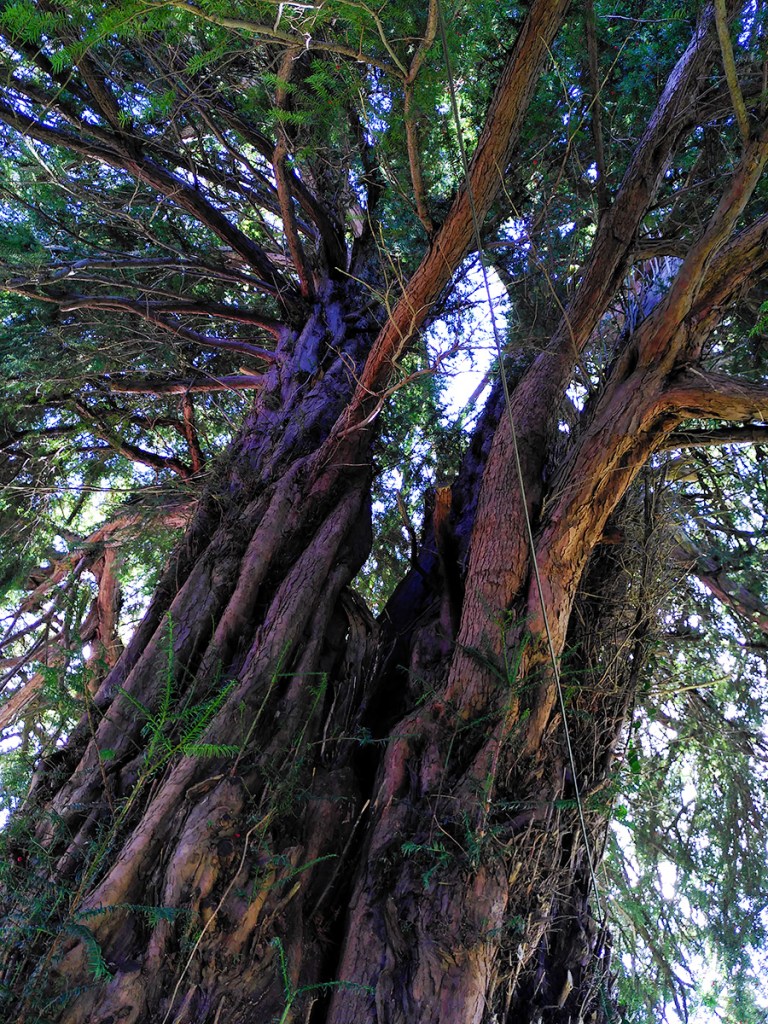
The Yew is a medium-sized evergreen tree of 10-20 metres high with a spread of about 6 metres. Every part of this tree is poisonous. It’s native to Europe, as well as parts of Africa, Iran, and southwest Asia. It’s a well-known tree of churchyards in the UK, but also grows wild on chalky soils. The Yew is surrounded by many myths. The dead were sometimes buried beneath Yew trees to ‘protect’ them.
They are a dense, glossy tree with dark green needles and bright red berries with a single dark seed. Yew trees can live for hundreds and even thousands of years, turning into a maze of hollow wood and fallen trunks beneath dense foliage. Trees of 3,000 years of age are not unusual.
Wood from this species was used to make English longbows used in medieval warfare.
Shropshire Wildlife Trust Wildlife Explorer, Trees and Shrubs, Yew
Trees and Shrubs Online, Taxus baccata
Scotland’s Yew Tree Heritage Initiative
 arboreus.earth