Eucalyptus camaldulensis (River Red Gum), Australia
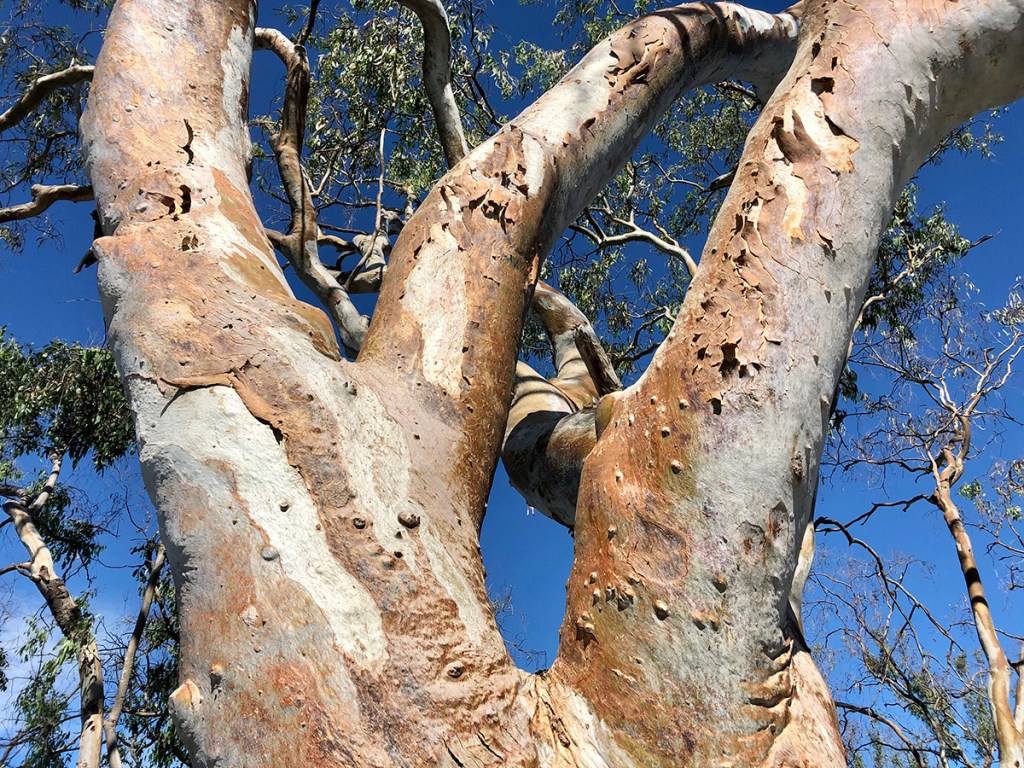
A much-loved Australian tree, the River Red Gum is common along the inland Murray-Darling river system and watercourses of semi-arid Australia. It’s a dominant tree species of the Murray-Darling basin spanning the states of New South Wales, Queensland and Victoria. It’s considered an ecologically and economically important species of the Murray-Darling.
This species of eucalypt have a deep sinker root, allowing them to tap into underground water supplies during times of seasonal drought. Seedlings can develop aerenchymatous roots to cope with immersion, as wet/dry cycles are important for the trees survival. Trees grows to a height of about 30-40 metres. It’s thought to be able to live between 500-1000 years.
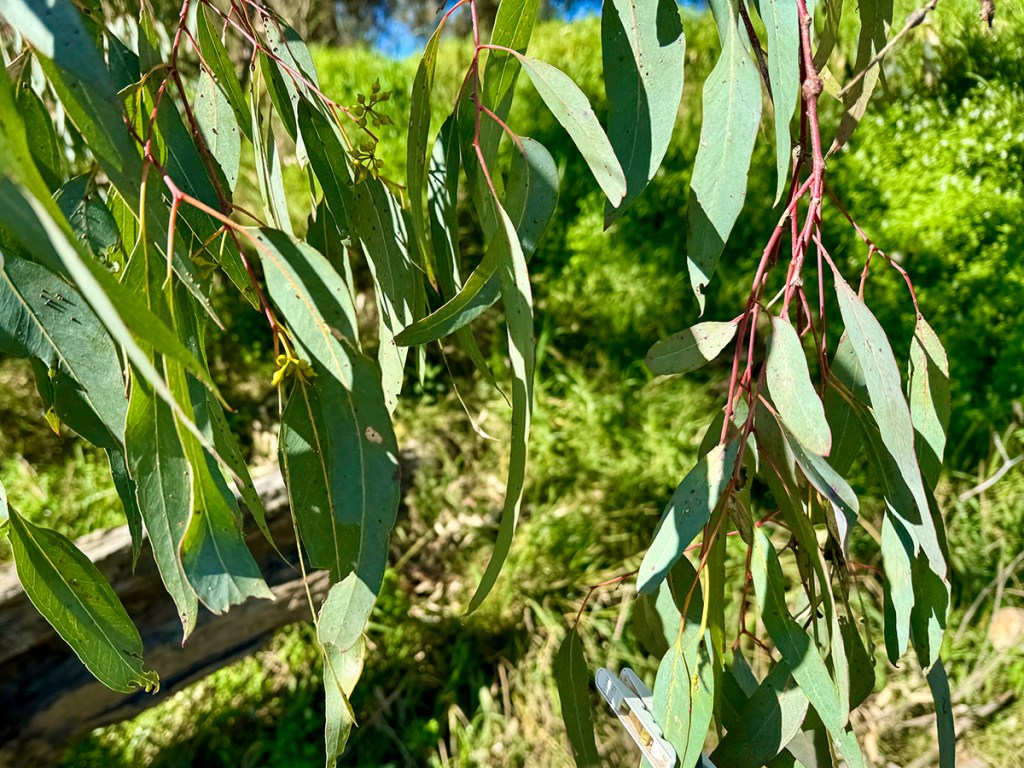
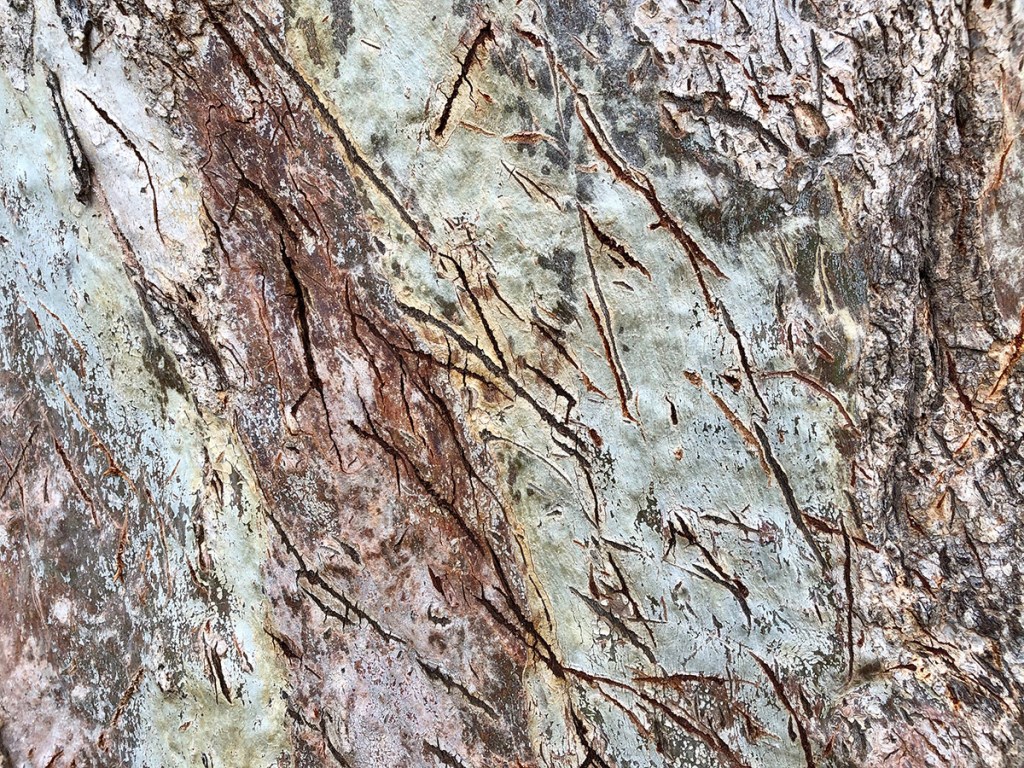
It generally flowers between late spring to mid-summer, producing white to pale-cream flowers. The bark at the base of the trunk is often rough, becoming smoother and white or greyish in colour higher up . Leaves are “typical” of eucalypts being lance-shaped up to 250mm long and blue-grey.
River red gum forests are historically and culturally important due to the number of significant Aboriginal sites they contain, including canoe and shield trees. Since settlement, the wood has been used for heavy construction, railway sleepers, flooring, framing, fencing, wood turning, firewood and charcoal production. The tree’s flowers are a source of honey production and an important source of good quality pollen.
CSIRO Water for Healthy Country
Yarngun
Listen to Yarngun on Soundcloud
When they came to Australia, my convict and settler ancestors relied on the natural environment of their new country to survive, but found the landscape, its trees and soils unfamiliar and hostile. There are trees alive today in Wellington (New South Wales Australia) that bore witness to the injustices of colonisation and settlement in the early 1830s, surviving to mark the generations who followed.
Yarngun explores this history in a composition of field recordings from the junction of the Wambuul Macquarie and Bell Rivers—a site of cultural and historical significance to the traditional owners of the land, the Binjang people of the Wiradjuri Nation, as well as to those who later lay claim. The story is told through the crackles, rumbles and creaks deep inside a majestic River Red Gum (Eucalyptus camaldulensis) that has stood over the river junction for at least 200 years, and the voice of water, wind, leaves, birds, frogs and insects that give this place its sonic identity; and the recorded words of a descendent of one of Wellington’s first families. Yarngun is a traditional Wiradjuri word meaning the roots of a tree—the foundations of living beings that grow, branch, flower and seed new generations.
My deepest gratitude to proud Wiradjuri woman, Kerryann Stanley for sharing her family history journey with me in the creation of this work and giving voice to the importance of knowing your roots to a deep sense of identity and belonging.
Kim V. Goldsmith, November 2024
 arboreus.earth