Casuarina pauper (Black Oak), Australia
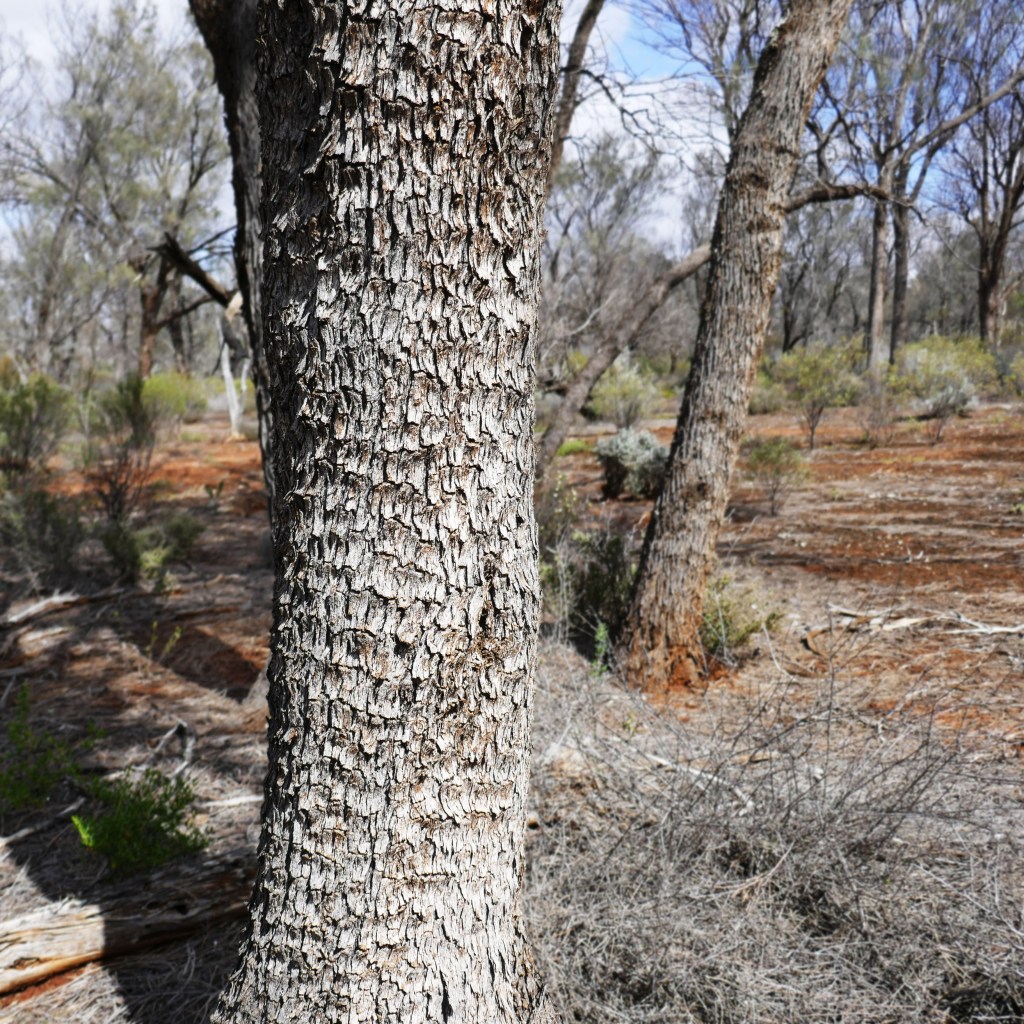
To the British colonisers, the wood of many casuarinas resembled European oak. Their common name reflects this, with Casuarina pauper being called Black Oak. For thousands of years before this renaming, First Nations Australians gave the names belah or kariku to the tree. No doubt there are many other names sent to the winds through those processes of colonisation that aim to silence.
Casuarinas are a genus of trees distributed throughout Australia. They are clothed in what appear to be grey-green ‘leaves’ hanging from branches like thick cotton threads about 250mm long. Because of this they sigh and sometimes wail in the wind. They do not rustle. These ‘leaves’ are actually branchlets, segmented every 20mm or so. Clustered around the end of each segment is a whorl of 10 or more tiny triangular leaves less than a millimetre in height. This is a water-conserving evolutionary modification that adds high notes to the sigh.
Casuarina pauper is distributed through drier parts of southern Australia, and due to this habitat, it is a pauper compared to other species of the genus. The trees grow to between 5 to 15 metres. Sometimes they live in groves reproduced by root suckers. Other times they reproduce sexually, the pollen from the male tree flowers taking to the breeze seeking a flower of a female tree.
 arboreus.earth